
If losing weight in your 40s feels like a different project than it was at 25, you're not imagining it, and you're not doing it wrong. The project itself has changed. The good news is that what works now is more sustainable, more measurable, and frankly more pleasant than whatever you were doing in your twenties. It just isn't the same playbook.
Why does weight loss feel different after 40?
Mostly because your life is different. At 25, you could decide on a Monday to overhaul everything: train daily, eat out of containers, sleep late on weekends to recover. At 45, the calendar is owned by work, family, and a hundred obligations, sleep is negotiable in the wrong direction, and stress is a permanent houseguest. Any approach that requires a life you don't have is going to fail, no matter how well it once worked.
Your training history matters too. Two decades of desks, drives, and deadlines change how you move, and most adults arrive at 40-plus carrying less strength than they had. Not because something is broken, but because strength that isn't used quietly drifts. That matters for weight loss more than most people realize, and it's the piece the old playbook ignores entirely.
Why don't the old approaches work anymore?
The classic weight-loss attempt looks like this: slash what you eat, do cardio every day, white-knuckle it until an event, then watch it all unwind by autumn. Three problems with running that play in your 40s:
- It's built on intensity, and intensity doesn't survive a real calendar. All-or-nothing plans lose to a busy week, then to a busy month, then entirely.
- It ignores strength. When you lose weight through restriction and cardio alone, the scale drops, but not everything you lose is what you wanted to lose. Preserving the strength and muscle you have while you lose is what keeps the result worth having, and that takes strength training, not more treadmill.
- It measures the wrong thing. One number on a bathroom scale can't tell you whether the change underneath is the change you wanted. Flying blind is how discouragement wins.
What does training that supports weight loss actually look like?
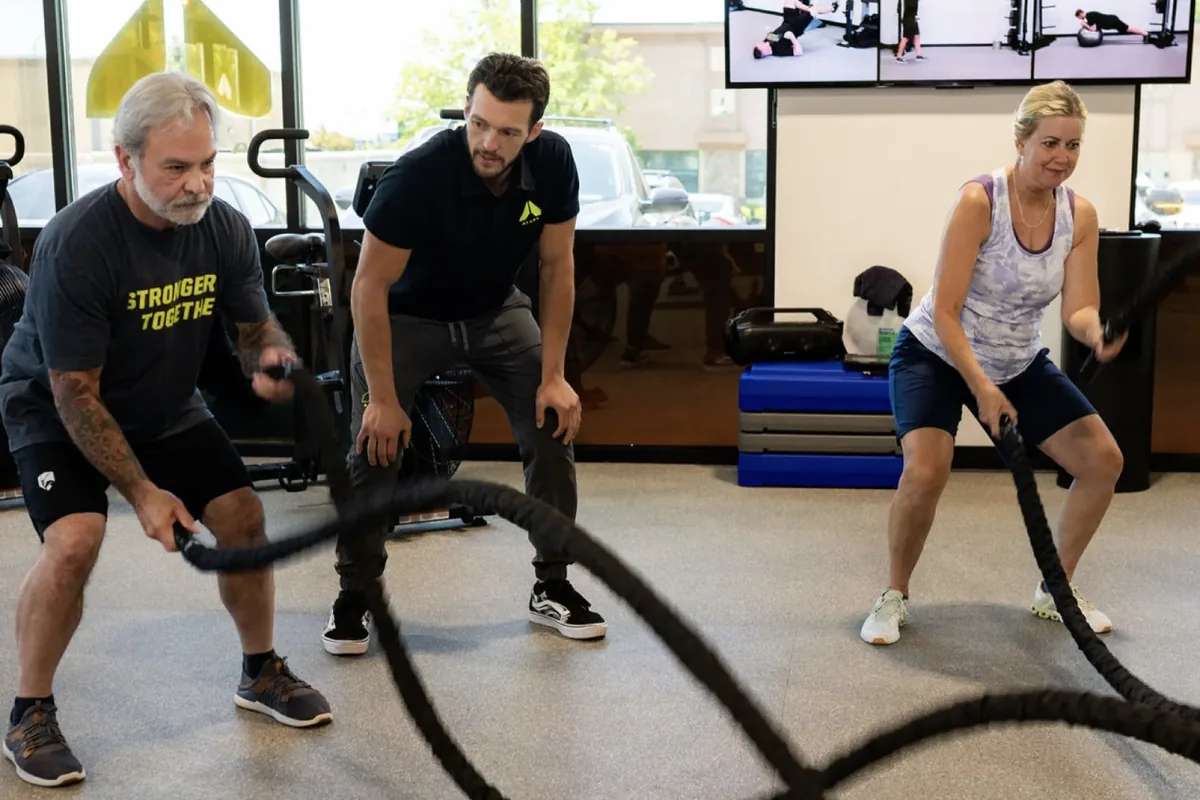
Strength first, consistency over intensity. The pattern we coach at our South Tempe studio:
- Two to three strength sessions a week, every week. Not six sessions until you miss one and quit. The boring, repeatable frequency is the effective one.
- Progressive, individualized programming. Each session builds on the last, scaled to your body and history, which is why our sessions are capped at six members with a coach watching every rep.
- Movement you actually enjoy layered on top. Walks around Kiwanis Park, a hike, the pickleball habit. Activity you'd do anyway counts, and enjoying it is what makes it permanent.
- Objective measurement on a sane cadence. Members here get monthly InBody body composition scans, so progress shows up in data, not just in a scale number that hides more than it tells.
If you're starting from a long layoff, start smaller than pride suggests. It's never too late to start strength training, and starting well beats starting hard.
Where does nutrition fit?
Nutrition matters, and it's exactly where the fad cycle does the most damage. Our approach is deliberately unfancy: evidence-based guidance toward sustainable eating habits that fit your life, not a named diet, a banned food list, or a plan that collapses at the first birthday dinner. And it isn't a one-time conversation. Members receive ongoing nutrition coaching throughout their membership, because habits get built through follow-up, not handouts.

What are the most common traps in your 40s?
After enough members, the failure patterns are as predictable as the success ones. Watch for these four:
- The dramatic restart. Monday arrives with a new app, a gutted pantry, and a seven-day training plan. It's the intensity trap wearing a fresh outfit, and it usually ends the same way: an injury, or a collapse back to zero. Sustainable beats spectacular, every time.
- Punishing a bad week with a brutal one. Missing three sessions doesn't create a debt you repay with double workouts. It creates a Tuesday where you simply train again. The members who succeed treat lapses as boring, not moral.
- Program-hopping. Six weeks into anything is exactly when it stops feeling novel and starts working. Changing approaches every time progress gets quiet keeps you permanently in week one.
- Letting the scale be the judge. Day-to-day scale movement is noisy, and it can't see what kind of change is happening underneath. Judging a month of honest work by one morning's number is how good runs end early.
A coach's real job is running interference on all four, which is easier to do when they see you twice a week and know your name.
What actually keeps the weight off?
Structure, not willpower. The people who succeed at this after 40 aren't more disciplined than everyone else. They've arranged their week so the right thing happens by default:
- Sessions at a fixed time, with a coach and five other people expecting them
- A program that's already decided, so zero decisions stand between arriving and training
- Small habit changes that survive vacations, deadlines, and Decembers
- A monthly number that tells the truth, so adjustments happen early instead of never
That's the honest answer to "what works": strength training you don't quit, habits sized to your real life, and enough measurement to steer by. Most members feel the first difference in energy, strength, and how clothes fit within the first few weeks. Meaningful body-composition change typically shows over 8 to 12 weeks, and the results that matter are the ones still there a year later.
If you're in South Tempe, the Corona del Sol area, or along the Kyrene corridor and you want a coach in your corner for this, Book Your Complimentary VIP Consultation. We'll run your InBody scan, assess how you move, and build the plan around the life you actually have. You can see how the whole program works on our services page.