
If you've started pricing personal trainers around Tempe, you've probably noticed two things: almost nobody puts a straight number on their website, and the numbers you do find are all over the map. Both have reasons. Here's an honest walk through what personal training tends to cost, why the range is so wide, and how to figure out what the right answer is for you, without a single bait-and-switch.
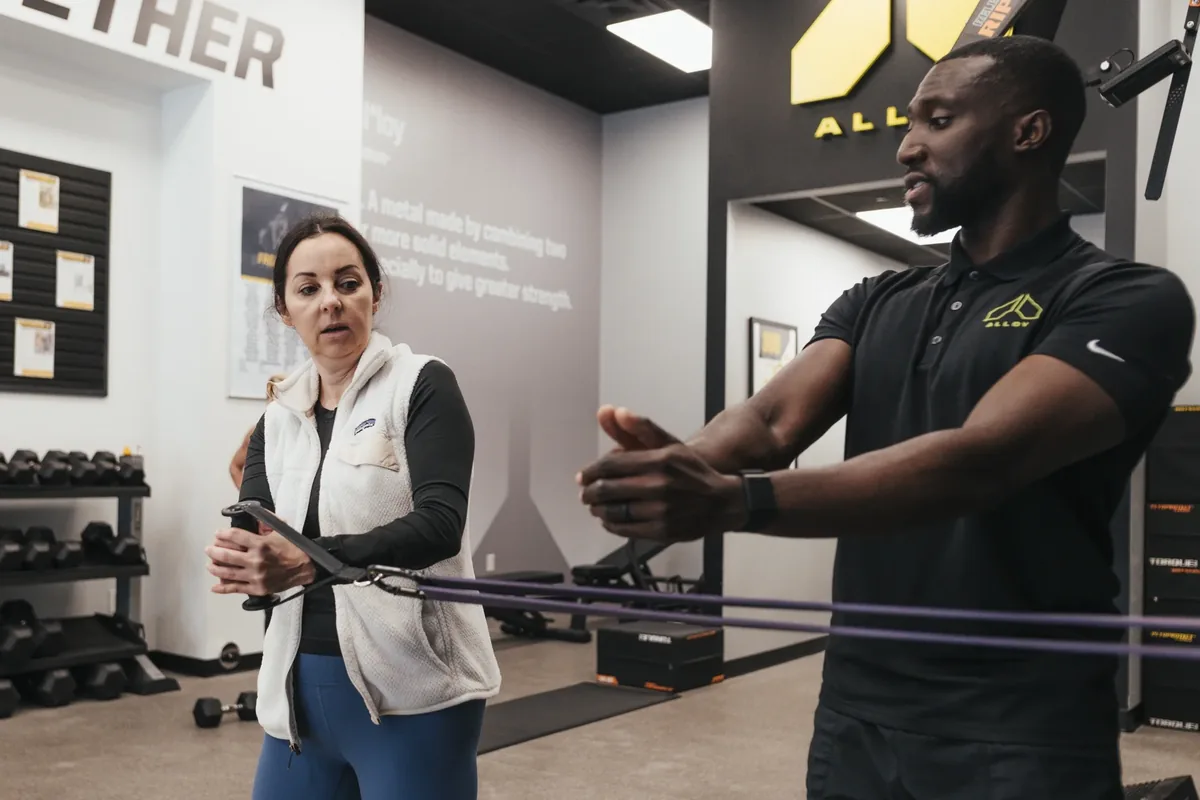
What do personal trainers typically charge?
Across the industry, one-on-one personal training is commonly advertised anywhere from roughly $80 to $120 or more per hour-long session, and busy metro areas like the East Valley span most of that range. Where a given trainer lands depends on the variables below. Because most rates are quoted privately and change with packages and commitments, treat any specific number you read (including these) as a ballpark, not a menu.
A few common formats you'll run into while searching in Tempe:
- Independent trainers renting space or training in a big-box gym, usually selling session packs
- Big-box gym trainers, often introduced through a low-priced starter package that steps up to standard rates
- Boutique and specialty studios, typically at the upper end, often with minimum weekly commitments
- Small group personal training, where a coach leads a capped group and the per-person price drops well below one-on-one rates
Why do prices vary so much?
Because "a personal trainer" describes wildly different products. The price usually tracks a handful of things:
- Experience and credentials. A veteran coach with a track record and continuing education charges more than someone six weeks past their first certification, and is usually worth it.
- Session length and frequency. Thirty-minute sessions cost less than hour-long ones, and most pricing rewards training more often.
- Format. One-on-one attention is the most expensive way to receive coaching. Groups spread the coach's time; the question is whether the group is small enough for the coaching to stay real.
- Programming and assessment. Some prices buy a workout that happens to you. Better ones buy an assessed, tracked, adjusted program. Ask what happens between sessions, not just during them.
- The room itself. Private studios price in a calmer, better-equipped environment than a crowded commercial floor.
What should that money actually buy?
Whatever you pay, the deliverable should be the same: a program built on an honest assessment of how you move, a coach who watches your form and adjusts in real time, progression that's planned rather than improvised, and some objective way to see change, whether that's measurements, strength benchmarks, or body composition data. If a price doesn't include those, it isn't a lower price for the same thing. It's a different thing.
That's the standard to hold anyone to, including us. Every Alloy membership starts with a Starting Point Session covering health history, goals, an InBody body composition scan, a functional movement assessment, and an introductory workout, because none of the coaching that follows makes sense without it.
How does small group personal training change the math?
One-on-one pricing has a structural problem: you're paying for 100% of a coach's time, and at two to three sessions a week (the frequency where results actually live) that multiplies into a serious monthly line item. Most people respond by training once a week, which dilutes the very results they're paying for.
Small group personal training solves the arithmetic differently. A professional coach leads a session capped at six members, each on their own program, each progressed or modified individually. The coaching attention stays personal, since six people is few enough to see every rep, while the cost of the coach's hour is shared. You end up training more often for meaningfully less than one-on-one rates, which is precisely the combination that produces results. We've written a fuller comparison of small group personal training versus big-box gyms in Tempe if you're weighing formats.
What questions should you ask before paying anyone?
Whoever you're considering in Tempe (us included), these questions separate coaching from access faster than any price sheet:
- "What happens before my first real workout?" The right answer involves an assessment: movement, history, goals, some form of measurement. "We'll get you started Monday" is a red flag dressed as enthusiasm.
- "Who watches my form, and how many people are they watching at once?" One coach and twenty class participants is arithmetic, not coaching. Ask for the actual cap.
- "How is my program adjusted over time, and who adjusts it?" If the workout would be identical whether or not you'd trained there for three months, you're buying entertainment, not progression.
- "How will we both know it's working?" Look for objective measures on a regular cadence, like strength benchmarks and body composition data, not vibes and before photos.
- "What happens if something hurts?" The answer should involve modifying the exercise on the spot, not pushing through or vague reassurance.
Anyone worth paying will enjoy answering these. Anyone who bristles just answered a different question.
Why don't we publish our prices?
Fair question, and not because the number is scary. Membership at our South Tempe studio depends on how often you train, and the right frequency depends on your goals, your history, and your schedule. Quoting one number to everyone would either overcharge the person who needs two sessions a week or undersell the one who needs four. The Starting Point Session exists to work that out, and pricing there is straightforward: real numbers for your actual plan, no pressure and no games.
What we can tell you up front: it costs a fraction of training one-on-one at comparable coaching quality, and it's designed for adults 40 and over who want results that hold up, not a locker-room key fob they'll stop using by spring.
How do you find out your number?
Spend one hour finding out what you'd actually be buying. Book Your Complimentary VIP Consultation at our studio on Warner and McClintock, near the Corona del Sol area and the Kyrene corridor, and you'll leave with your InBody results, a movement assessment, a coached workout, and a straight answer on membership options for your training frequency. If it isn't a fit, you've lost nothing and learned plenty. Still deciding? The FAQ covers what new members ask most.